Orysia Kulick excavates the colonial punitive logic behind Soviet nuclear infrastructure development. She reveals how Ukraine’s civilian reactors emerged from a toxic convergence of Gulag labour, the Cold War arms race, and imperial attempts to pacify populations through ‘proletarian atoms’ – a colonial logic that concentrated deadly infrastructure where resistance ran deepest.
For a system that purported to love science, the Soviet Union was actually rather afraid of scientists. After the 1917 revolutions, entire disciplines were toppled by politics and ideology. Communism idealised science and technology as progressive forces that would help usher in a new, more egalitarian, world. In practice, state interests played an outsized role in consequential fields of scientific inquiry, from genetics to physics. As we think about the legacies of Chornobyl, it is important to reflect on how these origins and, later, the race for the atom bomb and the shifting post-Stalin political order, shaped the Soviet nuclear programme. We have watched as Russia, in the fourth year of its self-sabotaging war, escalated its assault on Ukraine’s power grid, playing roulette not only with the lives of millions of Ukrainian civilians as they faced the coldest winter in recent memory, but also with the country’s nuclear facilities. This disregard for human life and environmental consequences has deep roots as a legacy of both Russian and Soviet imperialism.
The USSR had a sprawling nuclear archipelago stretching across eleven time zones that left an environmental disaster in its wake. Settlements from its twin, the Gulag, were never far out of reach. They worked together as a perverse double helix, exploiting human and environmental resources with little regard for both, in an attempt to alchemize the future. Sometimes they intersected dramatically. In the 1940s and 1950s, nuclear sites were often built by Gulag labourers, or people inhabiting the somewhat less punitive special settlements. Republics and regions with the misfortune of being in possession of uranium deposits saw their landscapes ravaged (like the areas near Chelyabinsk in Russia, or Kazakhstan). Ukraine has its own hazardous mining and processing facilities: the Prydniprovskyi Chemical Plant in Dniprodzerzhynsk (now Kamianske), which was built by Gulag labour in the late 1940s to process ore into yellowcake, one of the building blocks of weapons-grade uranium and nuclear fuel. There is also a uranium ore extraction and processing site at Zhovti Vody closer to Kryvyi Rih.[1] After World War II, Ukrainians and Balts became disproportionally represented in Gulag camps and special settlements, reminding us of the revanchist, and at times subversive, undercurrents shaping both archipelagos.
Ukraine has four operational nuclear power plants, a part of its vast Soviet infrastructural inheritance. The largest of these plants is located near Enerhodar, a city in the Zaporizhzhia region that is now under Russian occupation. Enerhodar was built as a company town in the service of nuclear power: one of six atomgrads – atomic cities – constructed in Ukraine in the 1960s–1980s, where engineers and their families could live and work. The ruins of its more famous counterpart, Prypiat, can be found in the Chornobyl exclusion zone, near the remains of Ukraine’s fifth, now defunct, nuclear power plant. Enerhodar’s youngest sibling, Slavutych, was built in the late 1980s to house workers who had been displaced after the Chornobyl nuclear disaster.
These atomgrads were demographic anomalies for Soviet Ukraine. Much of the rest of the country tells a different story. In Donetsk, for instance, sometime in the mid-2000s, I learnt during a city tour that one-third of the region’s men did not survive the first half of the twentieth century. Prypiat, by contrast, was a vibrant city full of young families, nuclear specialists, engineers, and plant workers, with a median age of 26. A new city had been built for them twelve kilometres from the Chornobyl plant, planned to house a population of 80,000. Soviet architects explored innovations in city planning that would allow for more green spaces, preschools, sports facilities, and art galleries, with lots of walkways for young families with strollers. Life in Prypiat was good, it was described as a ‘city of the future’. In a stratified command economy, where shortages of everything were a core operating principle, these atomic cities were places of privilege (as were other closed cities in the USSR’s vast nuclear archipelago). They were constructed with materials of higher quality, their stores were well stocked, the streets well-manicured. After Chornobyl, it became clear that this privilege came with a price, one understood viscerally by those who live daily in the shadow of nuclear power.
Ukrainians know intimately the long, lingering half-life of radioactive isotopes. When visiting Ukraine in my 20s, I learnt that many Ukrainians my age had their thyroids removed because of exposure to radioactive particles that circulated in the air they breathed as children in the aftermath of the Chornobyl disaster. Their own kids deal with ailments that can be tied to proximity to Chornobyl and the biopolitics of sweeping the aftereffects of this tragedy under the rug. When Russian tanks thundered towards the city of Enerhodar in the winter of 2022, the unarmed residents of this former Soviet atomgrad instinctively used their bodies as shields to try to impede their progress. It was a stunning, selfless collective act that was, unfortunately for us all, not successful. Russian military forces seized the Zaporizhzhia NPP, tortured and held hostage its engineers, and a year later detonated the dam holding back the waters of the Dnipro needed to cool its reactors. Enerhodar is the second Ukrainian atomic city to have been turned into a ghost town by empire. This time, residents were driven out not by Soviet bureaucratic incompetence, human error, or system failure, but by Russian invaders, who also booby-trapped Europe’s largest nuclear power plant in order to hold Ukrainians and the world hostage with threats of a nuclear apocalypse.
This was not an easy essay to think about or write, as my own family’s story is tied to the tainted roots of nuclear power. In our case, it is the Nazi concentration camp Dora-Mittelbau, where the Germans relocated production of their menacing V-1 and V-2 missiles after the Allies bombed Peenemünde in August 1943. The Nazis determined that prisoners from Buchenwald would carve a second missile production facility out of a mountain of gypsum near the town of Nordhausen. Prisoners arrived at a completely undeveloped site. They lived and worked underground for months, detonating rock with pneumatic hammers in twelve-hour shifts to prepare the tunnels for missile production. My maternal grandfather was assigned to a detail painting the tunnel walls a bright white, presumably for greater visibility while making weapons. But we don’t really know the reason. This work detail is not listed in studies of Dora, and the Mittelbau-Dora memorial complex staff had never heard of such a task. Why? Because almost no one who was there during those first months survived. My grandfather somehow did – a miraculous feat to which I owe my very existence.
Dora was a site scavenged by the Soviets and Americans towards the end of the war in search of technology, matériel, and personnel, which helped to propel them into space and precipitate a perpetual nuclear arms race. Both the United States and the Soviet Union forcibly repatriated thousands of German scientists, engineers, and technicians towards the end of WWII to work on highly specialised projects aimed at achieving military superiority.[2] Wernher von Braun, the aerospace engineer at the helm of the Nazi missile programme, is often referred to as the father of rocket science and the American space programme. Having been to Dora myself, I can’t imagine how he would not have seen the maltreatment of prisoners. Yet, to the end of his days, von Braun insisted that ‘neutral and apolitical’ scientists were not involved in creating this hellscape: slave labour and its management were the domain of the SS.[3]
The Soviets also went to Nordhausen and the surrounding area to scavenge for technological spoils from the V-2 missile programme. Among them was Sergei Korolev, a Zhytomyr-born aerospace and rocket engineer, also referred to by many as the father of the Soviet space programme. Unlike von Braun, who came from privilege and joined the Nazi party to further his work on rockets, Korolev had fallen afoul of the Stalinist regime in the late 1930s. Denounced by a superior during the purges, he spent six years in prison, working for a time in the gold mines of Kolyma before being reassigned to a sharashka – a prison for scientists and engineers – after an intervention by his mentor Andrei Tupolev. They would work together on developing bombers until they were both released in 1944. The following year, Korolev would be commissioned into the Red Army and sent to join the team reassembling and reimagining the remnants of the German V-2 missile programme.
Once the Soviets determined that they would use this technology (and materials stolen clandestinely from the Americans) to pursue the atom bomb, they had to find a place where they could mine uranium and turn it, through aggressive processing, into plutonium – the fuel needed for nuclear weapons. They walked to a remote location beyond the Ural Mountains, and found a plot of land near Lake Kyzyltash near the village of Kyshtym (not far from Chelyabinsk) that was ideal for their aims. As the USSR raced to develop nuclear weapons capabilities in the aftermath of Hiroshima and Nagasaki, they constructed the Mayak plutonium production plant there in haste. Like the weapons facilities built by prisoners at Dora, this site was developed from nothing. The NKVD, with Lavrentii Beria at its helm, ended up steering and managing the project, drawing extensively on Gulag labour also under Beria’s control (whether through shrewd politicking or in recognition of the USSR’s limited production capacities after WWII). In its brutality, the network of camps and settlements that would eventually build the Mayak plant resembled what we saw at Dora – humans thrown violently against bureaucracy and the elements in pursuit of unattainable ends.[4]
In 1957, an underground tank improperly storing nuclear waste exploded at the Mayak site, spewing radioactive isotopes into the environment, creating a contaminated expanse known as the East Urals Radioactive Trace. This was the worst nuclear disaster before Chornobyl. Even before the explosion, workers had dumped radioactive material into rivers and lakes surrounding Mayak, creating, in essence, a nuclear wasteland. The Soviets kept all this, and much more, hidden for decades. This event is known to us as the Kyshtym disaster, named not after the Mayak plutonium plant, but after a village inhabited by people, who by no choice of their own found themselves adjacent to hell. Equally in the dark were those living in special settlements nearby and perhaps residents of the privileged closed city Chelyabinsk-40, the atomgrad known to us now as Ozersk.
We have learnt from residents of atomgrads that they accepted some degree of calculated risk, though not entirely by choice. Radiation was an inextricable part of their lives, which were cushioned by privilege within an economy of shortage. But the web of communities involved – whether by choice or proximity – was much vaster than this constellation of informed initiates. I learnt from my friend, author Megan Buskey, about other locations near Mayak, where people likely would not have known what was happening around them in 1957 (or about the health risks that might come with it). Her family had been sent to Yemanzhelinsk, a coal-mining special settlement near Chelyabinsk (and two hours by car from Mayak), during a punitive operation intended to separate western Ukrainian insurgents from their families and presumed bases of support at the end of WWII.[5] The Gulag in the immediate post-WWII years was flooded with Soviet and German POWs, and an entire range of unreliable nationals from violently conquered territories, especially from the newly annexed western Ukrainian regions and the Baltic states.
Thinking about Chornobyl, I looked at the map of the former Soviet Union to see where one might find nuclear power plants – the civilian application of atomic energy. What I saw were nuclear plants and atomgrads disproportionally concentrated in Ukraine (and to a lesser extent Lithuania), lands from which Gulag labour was disproportionately sourced after WWII, especially in special settlements for political prisoners.[6] Nuclear power may have been a prestige project, but it was also a civilising project for the Soviets – a way to remake wild and troublesome landscapes and peoples with proletarian atoms.[7] In this light, Ukraine’s civilian nuclear inheritance is a vestige of the post-Stalin era. During those years, Soviet Ukrainian functionaries were tasked with taming their defiant compatriots – not just the insurgents in the newly annexed western territories, who clashed with Soviet authorities well into the 1950s, but also nonconformists in mainland Ukraine – all while bringing into being a rapidly expanding Soviet nuclear missile programme in places like Dnipropetrovsk.
These vectors point in different directions but seem to me to be fundamental to understanding the development of Soviet nuclear power. It is not uncommon for empires to skew the economies of their colonies to extract specific things, but this concentration of nuclear risk in a geography that has given the empire nothing but trouble historically does not sit quietly – especially now.
Endnotes
[1] Tatiana Kasperski, ‘The Ukrainian Peaceful Atom in Times of War: Environmental and Safety Concerns’, Politika (2023), https://www.politika.io/en/article/the-ukrainian-peaceful-atom-in-times-of-war-environmental-and-safety-concerns.
[2] Monique Laney, German Rocketeers in the Heart of Dixie: Making Sense of the Nazi Past During the Civil Rights Era (Yale University Press, 2015); Asif A. Siddiqi, ‘Russians in Germany: Founding the Post-war Missile Programme’, EUROPE-ASIA STUDIES, 56.8 (2004), pp. 1131–1156.
[3] Michael J. Neufeld, ‘Wernher von Braun, the SS, and Concentration Camp Labor: Questions of Moral, Political, and Criminal Responsibility’, German Studies Review, 25.1 (2002), pp. 57-78; Michael J. Neufeld and Ernst Stuhlinger, ‘Wernher von Braun and Concentration Camp Labor: An Exchange’, German Studies Review, 26.1 (2003), pp. 121-126.
[4] Kate Brown, Plutopia: Nuclear Families, Atomic Cities, and the Great Soviet and American Plutonium Disasters (Oxford University Press, 2013).
[5] Megan Buskey, Ukraine is Not Dead Yet: A Family Story of Exile and Return (Ibidem-Verlag, 2023).
[6] Oksana Kis, ‘Zhinochyi Dosvid Gulagu: Stan Doslidzhen’ ta Dzherelni Resursy v Ukrainskomu Konteksti: Chastyna Persha’, Historians.in.ua (November 2013), <https://www.historians.in.ua/index.php/en/component/content/article/21-doslidzhennya/943-oksana-kis-zhinochyy-dosvid-hulahu-stan-doslidzhen-ta-dzherelni-resursy-v-ukrayinskomu-konteksti-chastyna-i> [accessed 13 February 2026].
[7] Anna Veronika Wendland, ‘Nuclearizing Ukraine – Ukrainizing the Atom’, Cahiers du monde russe 60.2-3 (2019), pp. 335–368, https://doi.org/10.4000/monderusse.11212.
Orysia Kulick is an historian and author, who has published widely in areas of Soviet history, cultural resistance, and material cultures of authoritarianism, including an exhibition catalogue, War and Revolution: 100 Years of Cultural Opposition in Ukraine. Her piece ‘Gender and violence in Ukraine: Changing how we bear witness to war’ was awarded the 2023 Heldt Prize for best article by the Association for Women in Slavic Studies (AWSS). She has made a number of research trips to Ukraine, most recently in spring 2025 as Scholar in Residence at INDEX: Institute for Documentation and Exchange, in Lviv. Having returned since then to her hometown of Cleveland, Ohio, Orysia is exploring new genres in her writing, reconnecting with her musical roots, and resuming her work at the Ukrainian Museum-Archives, where she catalogues collections related to displaced persons and World War II.
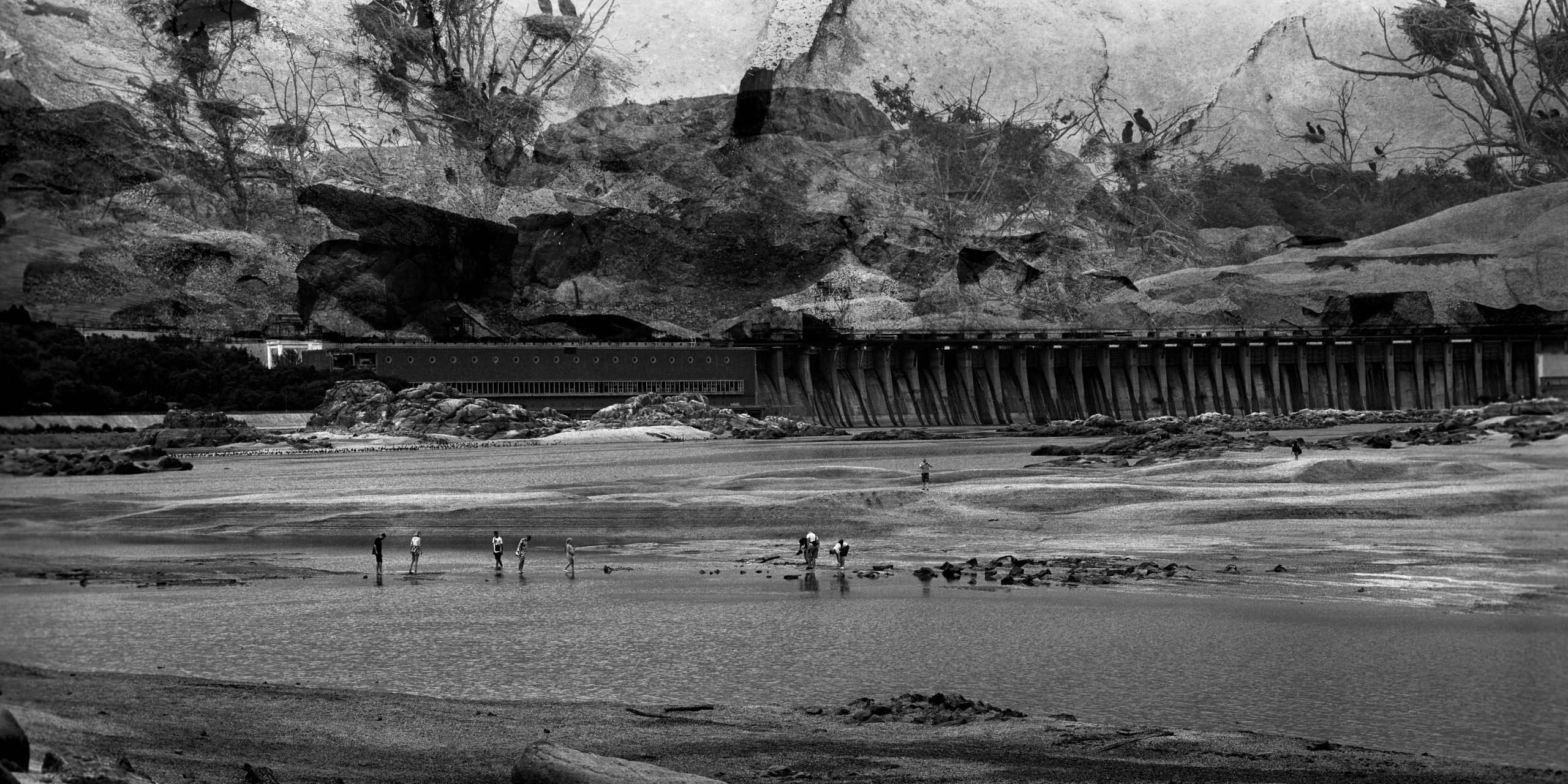
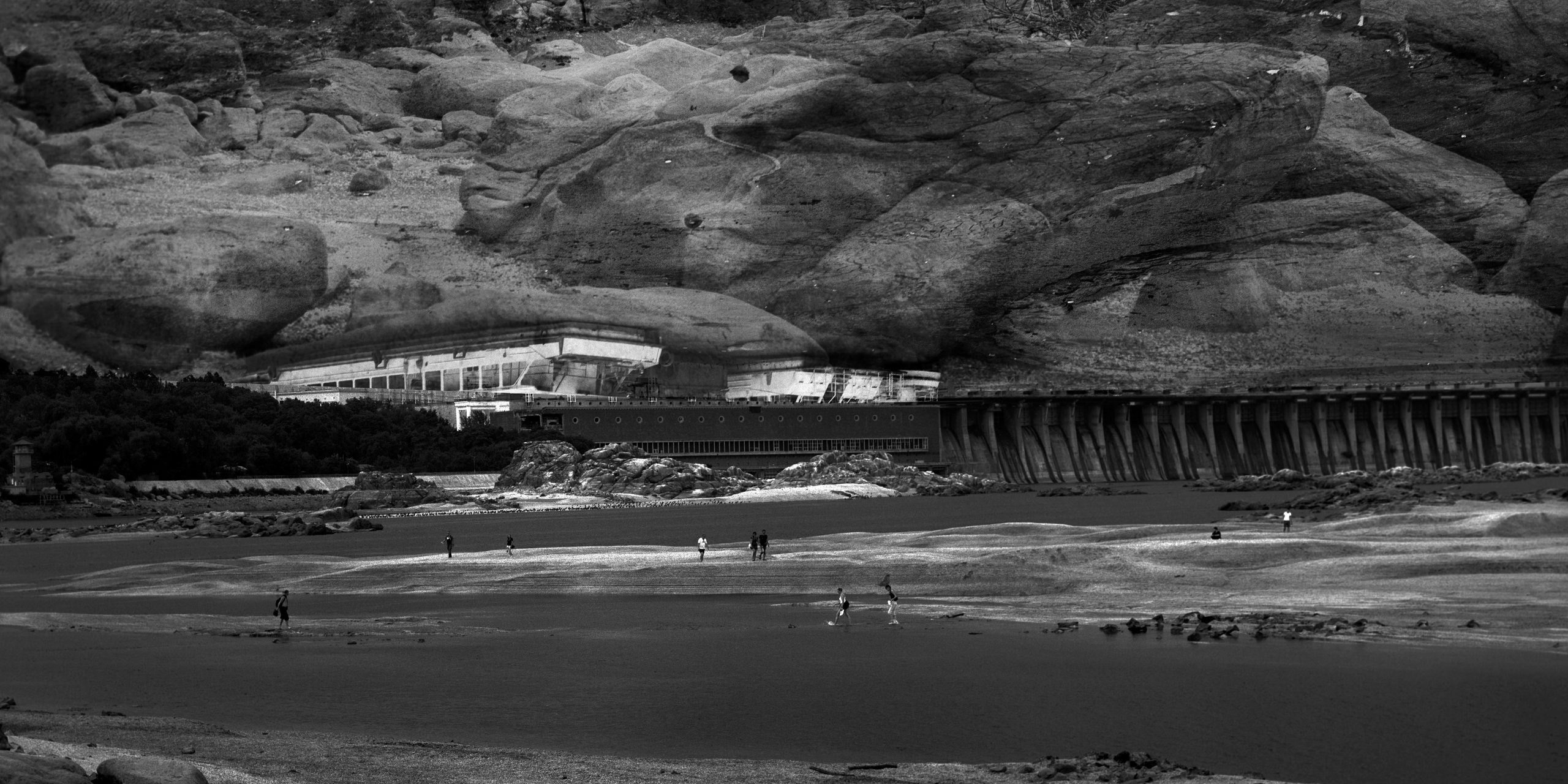
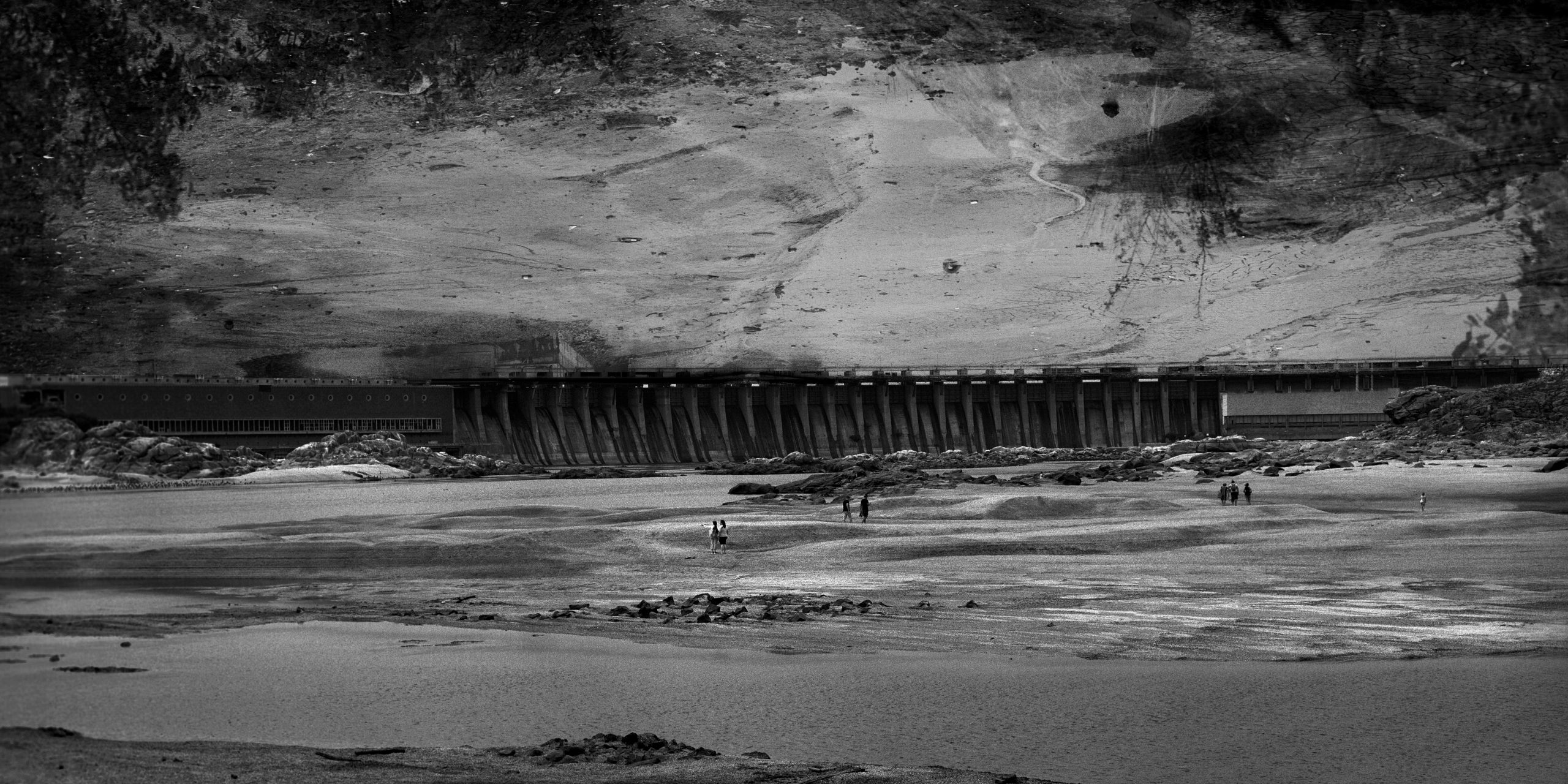
Image: Yana Kononova, Pilgrimage (V) from the series Desperation of Landscape, 2023