Author of The Nuclear Age, historian Serhii Plokhy, discusses how Chornobyl catalysed Ukrainian independence and reveals the nuclear industry’s structural vulnerabilities. The conversation explores how nuclear disasters transform politics across decades and geographies with a focus on the weaponisation of civilian nuclear infrastructure during Russia’s war in Ukraine.
Sasha Dovzhyk: You have written two fundamental books on the history of the nuclear industry and issues of nuclear security. The first one deals specifically with the accident at the Chornobyl nuclear power plant (NPP) forty years ago, and the second one is about six major nuclear accidents in history, from the Bikini Atoll nuclear test in 1954 to the Fukushima nuclear meltdown in 2011, and also includes the Chornobyl explosion. I would like us to start our conversation with your first Chornobyl book, History of a Tragedy. It is an illuminating exposé of the Soviet system and its malfunctions. This book made me realise that the very history of independent Ukraine has a nuclear birthmark. Could you help us trace the significance of the Chornobyl catastrophe for the political transformations in the late Soviet Union, and specifically for Ukraine gaining independence in 1991?
Serhii Plokhy: I was not the first to establish a connection between Chornobyl and independence, but few people elaborated beyond basic statements. As you suggest, the book presents Chornobyl as a window onto the late Soviet political, social, cultural, and administrative realities.
To a degree, it was a forensic type of investigation, looking at official documents, statements of the Rukh party[1], the number of people who demonstrated in Kyiv and in other places [in the aftermath of the accident]. I was certainly surprised by the degree to which Chornobyl launched Ukrainian politics, with people hitting the streets, and new organisations emerging, and how Chornobyl was played differently by different community groups and political parties. The role of the Writers Union became very clear. The first political party that was formed in Ukraine and officially registered was Zelenyi Svit [Green World] led by Yuri Shcherbak. The declaration of the formation of Rukh was closely linked to the first mass public demonstration in Kyiv in the fall of 1988. When you look at the first free elections to the Ukrainian parliament in early 1990, you see that a plurality (if not the majority) of candidates running for parliament made some sort of reference to Chornobyl. Look at Rukh’s programme: there is an environmental section, which is very much about Chornobyl. I was very impressed by what I found once I decided to explore the idea that there was a direct connection between Chornobyl and Ukrainian independence. So the first mass demonstration in Kyiv was about Chornobyl, and that marks the beginning of civic action and politics as such.
SD: In some sense, Chornobyl can be said to have paved the way for positive political change in Ukraine. Your other book on the nuclear industry makes an important case for nuclear pessimism. Even though nuclear energy is commonly listed among the solutions to the worsening climate breakdown, with powerful proponents such as Bill Gates, you show that the nuclear industry remains too expensive, unpredictable, and vulnerable to security threats for us to rely on it for addressing global problems. You highlight industry problems, such as the disposal of spent fuel (currently bequeathed to future generations), the diversion of investment from renewables, terrorist threats, and, as we have learnt from our experience in recent years, the possible co-option of civilian nuclear sites in military conflicts. What are your current thoughts on the future of ‘atoms for peace’, as US President Eisenhower called the nuclear industry in his UN speech of 1953? Can we say that humanity has made a full circle and turned the industry into ‘atoms for war’?
SP: While researching that book I learnt that this notion of two ‘types’ of atoms was a result of a very specific propaganda programme during the Cold War in the 1950s. It was launched with President Dwight D. Eisenhower’s December 1953 UN speech, ‘Atoms for Peace’. The point was to demonstrate to the American public, in the first place, that there were not only ‘bad atoms’, but also ‘good atoms’. The US was really shaken by the [devastation caused by the US bombing of] Hiroshima and Nagasaki, and atoms were considered the worst thing that humankind could produce. In the 1950s, President Eisenhower was actually presiding over the largest nuclear buildup in history, counting on US nuclear power superiority in the Cold War with the Soviet Union. The image of the atom had to be somehow improved.
The other part of that programme was to stop nuclear proliferation. In the public eye, it looked unfair that the US, and later the UK, had nuclear weapons, while other countries were denied access to nuclear power. The argument went like this: ‘We don’t want you to have bombs because we are so responsible and you are so irresponsible. But, we will help you get access to “good atoms” that will help with the development of your economy.’ That’s the whole idea of ‘atoms for peace’.
And it was extremely difficult to make those ‘atoms for peace’ work. The risks of nuclear accidents were so high that the government had to provide most of the money [for development]. Governments also had to provide guarantees because no one would insure a nuclear power plant.
This story continues till today. The way that business works (with a predictable and timely return on investment), the nuclear industry can’t really function without support from the government, and government support is usually provided in the context of the military nuclear programme. For instance, the people who worked on the first US civilian reactors were trained in the US Navy.
That connection is not obvious when you read speeches, but it became clear while I was doing my research. What we have today is a reconnection of these two branches of the same tree, which has military roots. Now the military face of the two-faced nuclear Janus and the civilian face are coming together, producing things like the occupation of the Chornobyl NPP and the Zaporizhzhia NPP.
SD: It’s a paradoxical situation. As we are speaking, our friends and colleagues in Kyiv, in Dnipro, in Zaporizhzhia are sitting in their freezing apartments and offices without electricity because Russia keeps bombing Ukraine’s energy grid. The situation in western Ukraine, where I am based, is slightly better. The only reliable source of energy that remains in Ukraine is actually nuclear energy, which produces half of the electricity in the country. At the same time, we know that it is reliable insofar as Russia is not bombing nuclear reactors right now. On the one hand, it’s the only remaining secure source of energy in the country, and on the other hand, Russians have militarised nuclear power plants in Ukraine for the first time in history, and there is nothing secure about that. How do you view this paradox and our dependence on nuclear energy in Ukraine right now?
SP: I have a short book called Chornobyl Roulette. It covers the roughly one month and one week of the Russian occupation of the Chornobyl NPP. As with my previous books, I began with certain expectations and was surprised by what I learnt as a result of my research. I continued to use Chornobyl as a window onto the state of Ukrainian society. In this case, it demonstrated changes that had happened in society since the fall of the Soviet Union. The Russian occupiers demonstrated the same features as did their Soviet predecessors – the blind following of orders, a lack of personal dignity or respect for human life. The Ukrainians, on the contrary, self-organised and defended their dignity, despite the challenges of the occupation. Truly, a new nation was born.
Here another factor was the broader international context of the story. What I realised was that the international community and the International Atomic Energy Agency (IAEA), for all the criticism they received, couldn’t do much. Even in what they did, they were going outside of their mandate.
As shocking as it may seem, the last major international agreement, not to mention legislation, comes from the late 1970s. In Article 56 of the Additional Protocol to the Geneva Convention (1977) that provides protection to nuclear plants during war, nuclear power plants and hydroelectric power stations all fall in the same category. Nuclear facilities are not even treated separately. Technically, it is impossible to build a promising court case today to prosecute Russian violations of international agreements with the occupation of Ukrainian nuclear power plants, because there are so many loopholes in these international agreements.
There is no international legal base to deal with the military takeover of nuclear power plants. There are no independent institutions with the authority or resources to do that. The IAEA is part of the United Nations system. Rafael Grossi, who is the Director General, is a courageous individual, in my opinion. But he is certainly serving a number of masters, one of whom is the Russian Federation. Mr Grossi is now running and participating in PR campaigns to become the next Secretary General of the United Nations, and needs the backing of Russia. So much for IAEA independence from the members of the Security Council. That’s where we are. And we are counting on nuclear power to deal with the climate crisis. Until we find a way to protect the reactors, this is quite problematic.
The only thing that has worked so far with ‘atoms for peace’ is the same thing that worked for ‘atoms for war’. That is the doctrine of mutually assured destruction: you don’t nuke the other country, because you can be nuked. And the Russians found [themselves in a vulnerable position] in 2024, when the Ukrainian army was approaching the Kursk NPP. The Ukrainian drones that now go all the way to the Volga River can easily reach Kursk and other nuclear sites. That is one of the reasons Russia is not bombing Ukrainian nuclear sites directly, but is going after the distribution system, Ukrenergo[2] infrastructure, substations, transformers, and so on.
No moves have been made so far in the international arena to deal with this new threat. It’s not just about Ukraine. It’s about global security in general. People can be optimistic or pessimistic about ending Russia’s war in Ukraine, but I have never heard anyone suggest that this will be the last war for humankind. There will be other wars. Currently, there is no international discussion around developing a mechanism to impose legal consequences on an invading state that attacks and occupies nuclear power plants.
SD: The war in Ukraine has already gone nuclear. We are not only thinking about the nuclear blackmail that Russia is using against the entire world, but also about the occupation of Ukrainian nuclear power plants. The continuing Russian occupation of the Zaporizhzhia NPP poses a huge security risk to the entire continent.
From a report compiled by the Truth Hounds war crimes investigation team, we know that 78 employees of the Zaporizhzhia NPP were detained, tortured, and kept in unlawful conditions. Putting the staff in charge of such intricate and sophisticated machinery under duress is completely unlawful, chaotic, and dangerous. This is happening within a general militarisation of the territory of the plant, which includes stationing Russian military vehicles and personnel in turbine halls, the construction of fortifications, the deployment of weapons, and other actions that pose a risk to the plant’s nuclear stores.
Our hope for restoring safety is to restore Ukrainian control over the Zaporizhzhia NPP. However, for external observers, even the thought of restoring Ukrainian control over the Zaporizhzhia NPP seems impossible, despite the fact that we witnessed the restoration of control over an occupied nuclear power plant in 2022, when the Ukrainian army liberated the Chornobyl area. I would like us to chart a scenario under which Ukraine could restore control over the Zaporizhzhia NPP, because I think that liberation starts with our political imagination.
SP: It is actually very easy to imagine, because it almost happened in the autumn of 2022, when the Russian army was forced to leave the right bank of the Dnipro River, abandon Kherson, and the Russian frontline was collapsing near Kharkiv. It was at that moment that Russia started to use nuclear blackmail. The Russian Minister of Defence at the time, Sergei Shoigu, called his counterparts in the NATO countries, and made threatening statements claiming that Ukraine allegedly had nuclear elements for dirty bombs and was planning to use them. It was nuclear blackmail, and it worked. The idea of potential nuclear war in Ukraine was very much on the mind of the entire Biden administration. It certainly influenced the supply of US weapons to Ukraine, including delaying the promised delivery of weapons and equipment, including F-16s. That produced the failed Ukrainian counteroffensive.
That counteroffensive was about cutting off Crimea from the mainland. Once the peninsula is cut off from the mainland, it would be the end of Russia’s occupation of the Zaporizhzhia NPP, and also Russia’s loss of control over Crimea. The consensus [in the US and among Western allies] was that that was allegedly the red line after which the war would go nuclear. So the Zaporizhzhia NPP is not under Ukraine’s control today largely because of Russian nuclear blackmail.
SD: What lessons can we draw from this situation for the future in the political context we are currently inhabiting, with US President Trump basically taking Putin’s side and with Europeans only now perceiving the threat of a larger war on the continent as real?
SP: First of all, the security of nuclear power plants is something that is in the interest of every country that has nuclear energy, including the Russian Federation. Russia’s vulnerability was shown by the Ukrainian army’s approach to the Kursk NPP. The use of drones is another example of Russia’s vulnerability. Ukraine’s Operation Spiderweb keeps thousands of security experts all over the world up at night, because every nuclear facility can be a target of a similar operation, and not necessarily conducted by Ukraine. What we need is an international agreement that protects nuclear sites from war operations, with an international force responsible for taking over those sites in the case of war.
We don’t know how and when exactly the Russo–Ukrainian war will either come to an end, or a ceasefire around the Zaporizhzhia NPP will be declared. One of the things being discussed now by the US is the possibility of American control of the Zaporizhzhia NPP or maintaining a presence there. If this were to happen, it would also be a test case to see how the presence of an international force could deal with the issue of protecting nuclear sites.
Then there is the issue of the nuclear arms blackmail that I discussed before. Stopping it is not a matter of a new international agreement. The solution is in returning the balance of fear that existed during the Cold War. Preserving peace through the ability to respond to a nuclear threat with another nuclear threat was lost after 1991. Russia launched its full-scale invasion in 2022 in the absence of this balance of fear. Russia was not the only nuclear power. There were plenty of other nuclear powers, but Russia was blackmailing, and the others were fearful.
You mentioned Donald Trump, who is presiding over a major break within the Western alliance. His actions present a major threat to the international order and international norms that we used to rely on. But there is another side to this story, and that is that Trump responds to Putin’s nuclear blackmail with counter-threats. The balance of fear is coming back. Looking at the history of the Cold War, this balance of fear allowed us to survive the first decades of the nuclear age, which were probably the most dangerous ones, because no one knew how to behave under those new circumstances.
SD: So it turns out that mutual nuclear blackmail makes us safer?
SP: It’s an extremely dangerous game, but international agreements are there to be broken, and international institutions, like the United Nations, never functioned well. The UN was created as a security organisation. It is presided over by the club of nuclear powers, which is called the Security Council. That experiment wasn’t very successful. What became successful was a form of balance of power, now nuclear power.
SD: If we now try to return to the actual accident at the Chornobyl NPP forty years ago, can we discern any impacts on our imagination, on our political vision, created by this disaster that are at play today? Can we say that the Chornobyl catastrophe influenced the way we currently respond to crises? Is the current nuclear security crisis shaped by Chornobyl in any way?
SP: Chornobyl was one of many nuclear accidents, but it was the largest one. It had a profound impact, more than any other crisis, on the Ukrainian political landscape, and also on global thinking about nuclear disasters. One thing that became a mantra after Chornobyl was ‘Chornobyl anywhere is Chornobyl everywhere’. Radiation doesn’t recognise international borders.
It is a state’s sovereign decision to build a nuclear power plant and how to run it, but once an accident happens, it’s no longer limited to the sovereign territory of that state. It becomes a problem for the entire region, and potentially the entire globe: therein lies the realisation of the global threat [of nuclear power].
As a direct result of the Chornobyl catastrophe, a number of agreements were signed and a base for today’s international law was produced. The Fukushima disaster did not have the same impact, in part because certain things were already in place, and also because Japan happens to be surrounded by ocean instead of other countries, unlike Ukraine in Europe. Even so, Fukushima was a major trigger for Germany’s decision to go nuclear-free. That’s just one more thing that confirms the global impact of nuclear disasters.
You had asked me about the future of nuclear energy in relation to our current thinking about the environment and climate change. The tricky thing is that we can’t really count on nuclear energy as a reliable and sustainable source of energy, not only for economic or security reasons, but for political reasons as well. After every nuclear accident, no matter where it happens on the planet, the building of new reactors is put on hold for anywhere from ten to thirty years. That’s how we humans react to nuclear power. Radiation is an invisible threat, which is actually more threatening to humans than visible ones. After the Three Mile Island accident, there was a decades-long pause for commissioning new reactors in the US. Chornobyl stopped the nuclear renaissance that was supposed to happen. Then there was Fukushima, which impacted faraway Germany. Complex systems like nuclear reactors, especially now that we are on the verge of having modular reactors, are untested technology. I’m sure that in the long run it will prove itself, but at the beginning, any new technology malfunctions.
We started our discussion with the political nature of nuclear power. The impact of the Chornobyl accident was Ukrainian mobilisation. The political impact of Fukushima was German denuclearisation. You’re playing nuclear roulette in political terms as well, when you count on nuclear power.
Endnotes
[1] Narodnyi Rukh Ukrainy [The People’s Movement of Ukraine] is a civic–political movement founded in 1989, which played an important role in Ukraine’s declaration of independence in 1991. It functions as a political party to this day.
[2] Ukrenergo is the state-owned sole operator of Ukraine’s electricity transmission system.
Serhii Plokhy is the author of the New York Times bestseller The Gates of Europe and Chernobyl: History of a Tragedy, which won the Baillie Gifford Prize. His many acclaimed books, including Nuclear Folly, Atoms and Ashes, and The Last Empire, have been translated into over a dozen languages. Plokhy’s most recent book is The Nuclear Age: An Epic Race for Arms, Power and Survival. He is the Mykhailo S. Hrushevskyi Professor of Ukrainian History at Harvard University.
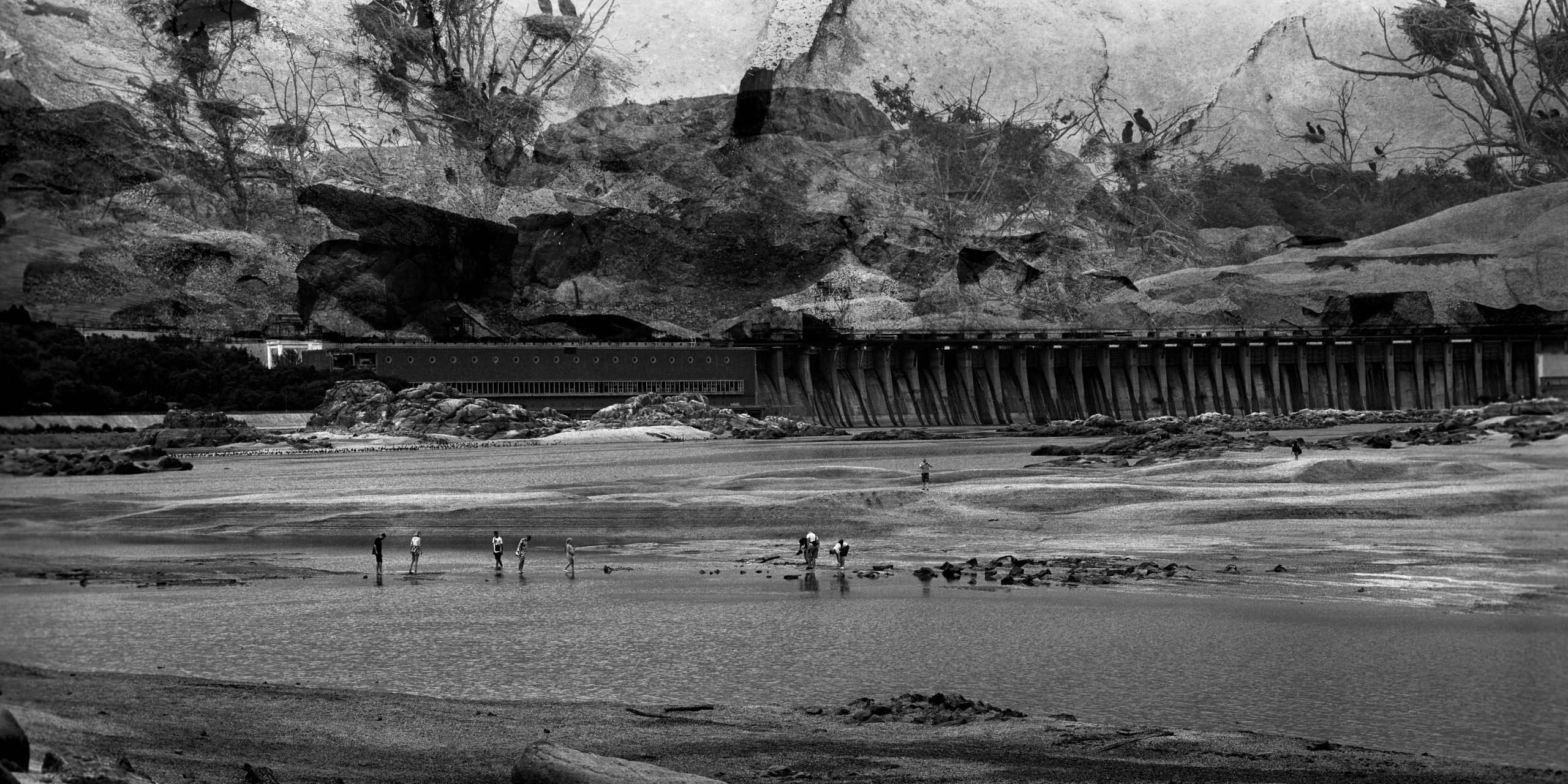
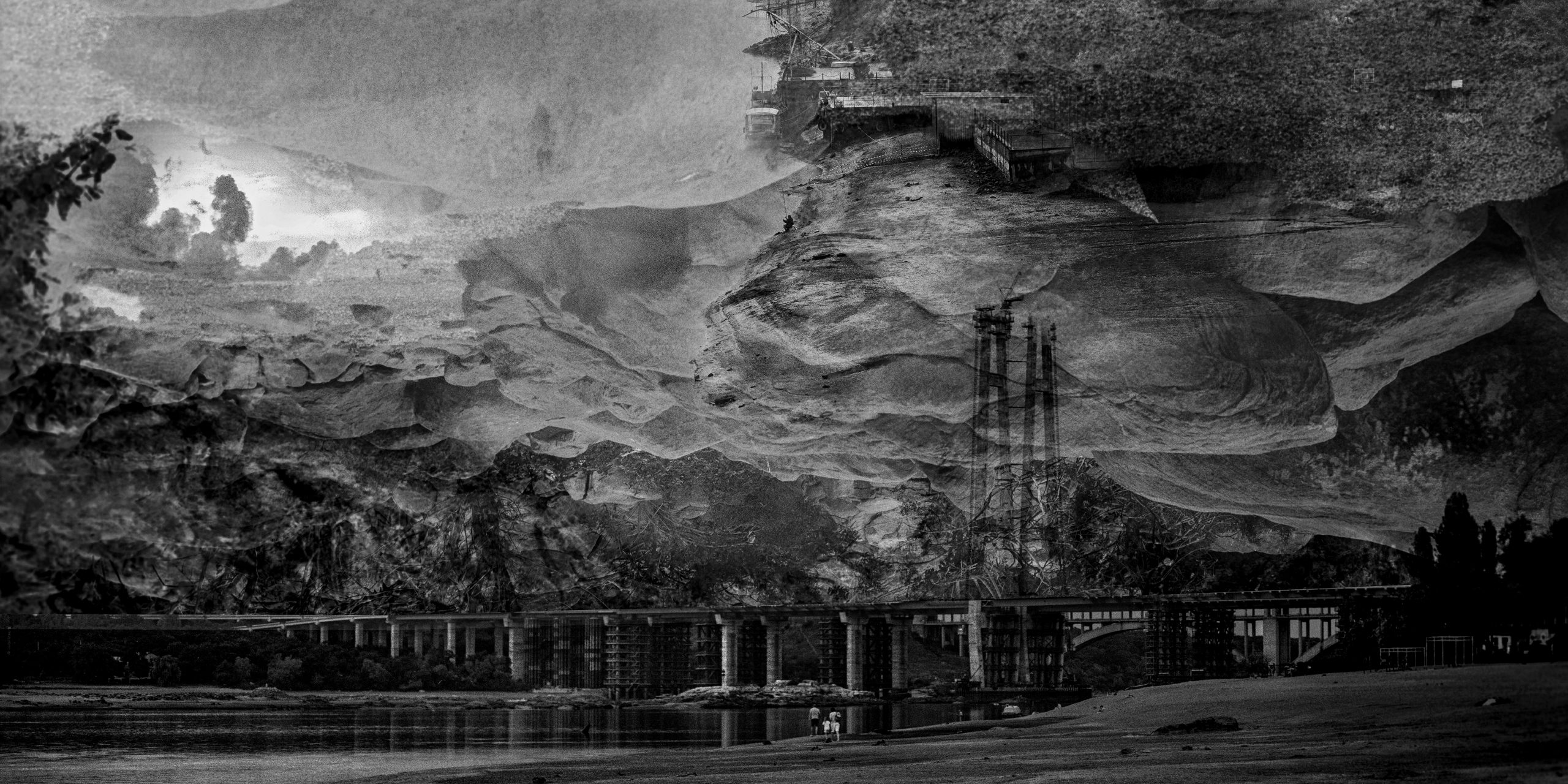
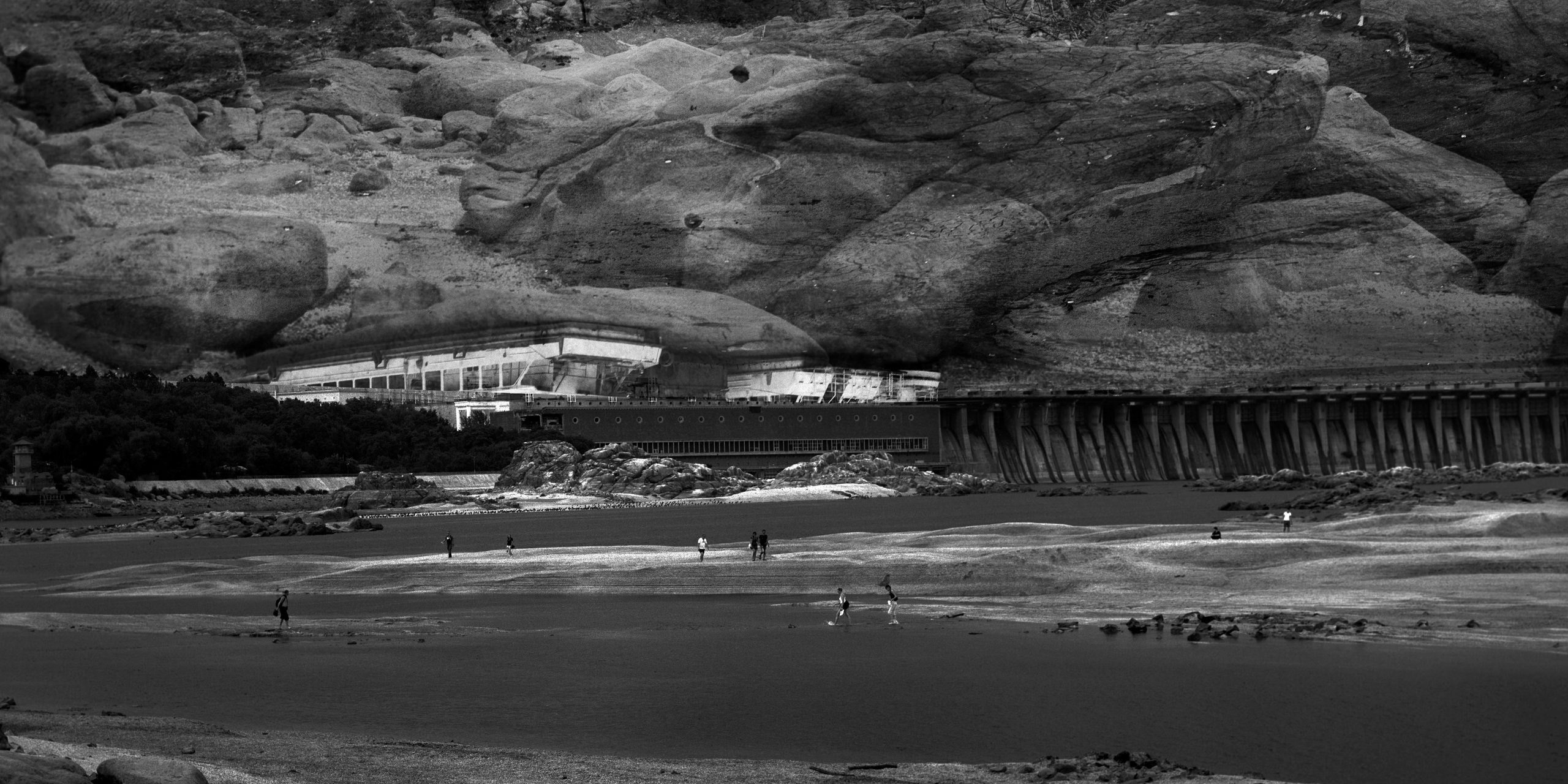
Image: Yana Kononova, Pilgrimage (VIII) from the series Desperation of Landscape, 2023